Europe's Most Haunted Cities for Erasmus Students
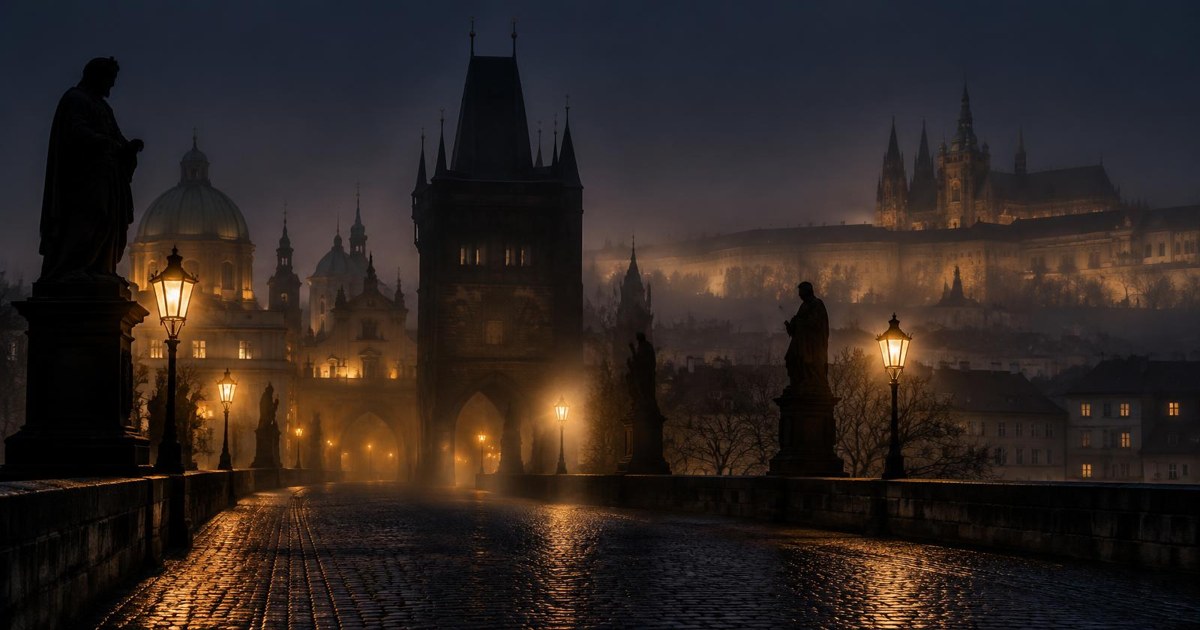
Every old European city has two versions. There is the daytime city of lecture halls, cafés and cheap lunch menus — and there is the one that comes out after dark: crypts lined with bones, alleys named after executioners, towers where prisoners were walled in, and stories that locals still tell half-jokingly to newcomers.
This guide explores the darker side of seven Erasmus cities already on our platform: Prague, Rome, Budapest, Bologna, Krakow, Berlin and Vienna. For each one we separate three things clearly: documented history (what actually happened), legend and folklore (stories passed down for centuries), and paranormal claims (ghost sightings with no verifiable evidence). We also cover what each city offers as a place to actually live for a semester, and what the eerie sights cost to visit.
This is an editorial selection, not a comprehensive ranking of Europe or evidence that any place is literally haunted. Visitor information was reviewed for publication on 1 November 2026. Where a price could not be confirmed, we link to the official visitor information instead of guessing. Reduced tickets depend on age, nationality or student status: check the conditions before booking.
1. Prague — alchemists, golems and a city of a hundred spires
The dark history
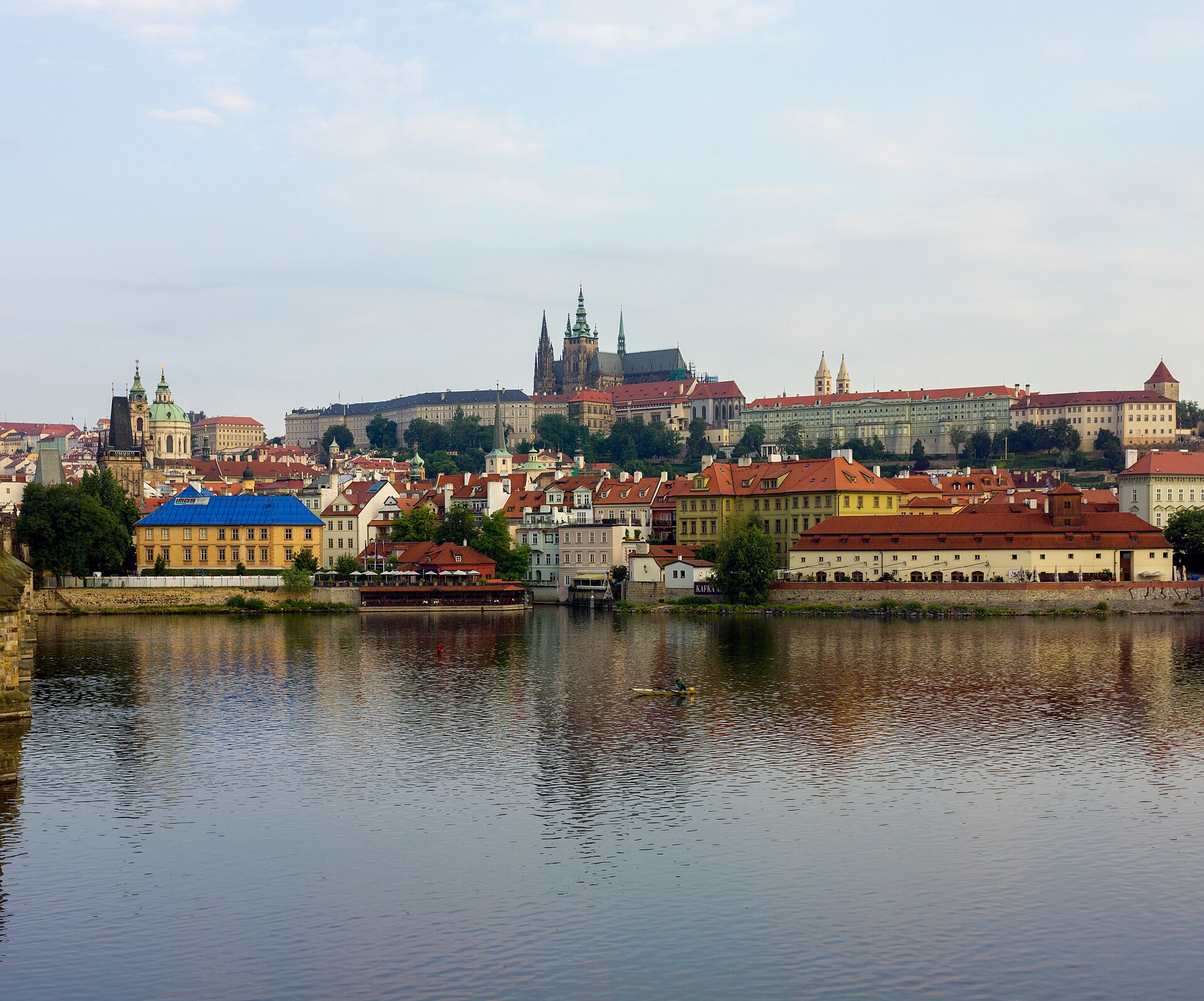
Prague has the rare advantage of having been spared large-scale destruction in the 20th century, so its medieval and Renaissance core survives almost intact — and with it, centuries of stories. Under Emperor Rudolf II (late 16th century) the city became a magnet for astrologers and alchemists, including Edward Kelley and John Dee. The city also witnessed the Defenestrations of Prague: in 1419 Hussite rebels threw town councillors from the New Town Hall windows, and in 1618 Catholic officials were thrown from Prague Castle, an event that helped trigger the Thirty Years' War.
In 1621, after the Battle of White Mountain, 27 leaders of the Bohemian revolt were executed on Old Town Square. Twenty-seven white crosses set into the paving next to the Old Town Hall mark the spot, and most visitors walk across them without noticing.
Haunted places
- Old Town Square and the Old Town Hall — the 27 crosses, the astronomical clock with its skeleton figure of Death ringing the bell on the hour, and underground Romanesque rooms visible on guided tours.
- The Old Jewish Cemetery (Josefov) — gravestones layered on top of each other because burials were confined to a small plot for centuries. Rabbi Judah Loew, linked to the Golem legend, is buried here.
- Golden Lane and Daliborka Tower at Prague Castle — the tower was used as a prison; legend says the imprisoned knight Dalibor learned to play the violin so beautifully that crowds gathered below.
- Sedlec Ossuary (Kutná Hora) — about an hour by train from Prague, this small chapel is decorated with the bones of tens of thousands of people, including a chandelier made from bones. It is one of the most striking places in Central Europe.
The creepiest legend: the Golem
According to legend, Rabbi Loew shaped a giant figure from Vltava clay in the 16th century and brought it to life to protect the Jewish quarter. When the Golem grew uncontrollable, the rabbi deactivated it and stored the body in the attic of the Old-New Synagogue, where — the story goes — it still lies. This is folklore: the tale became popular in the 19th century and there is no historical evidence for it, but the synagogue itself (one of Europe's oldest active synagogues) is very real.
Historical mysteries
Rudolf II's court is linked to the Voynich Manuscript, an illustrated book written in an undeciphered script that is now held at Yale University. The emperor is said to have bought it, though the full chain of ownership is debated. Local folklore also includes the headless Templar knight of Liliová street and the Iron Man of Old Town — ghost stories without any verifiable evidence, but a staple of Prague's popular night tours.
The Erasmus side
Beyond its ghosts, Prague is one of the most popular Erasmus destinations in Central Europe: Charles University (founded in 1348) and the Czech Technical University host large international communities, beer is among the cheapest in the EU's capitals, and the club scene runs late. Day trips to Kutná Hora, Český Krumlov or Dresden are easy and cheap by train.
Budget
- Free: the 27 crosses on Old Town Square and the astronomical clock's hourly show (8:00–23:00 according to Prague City Tourism). Castle grounds and Golden Lane have separate access rules; do not assume the lane is free or accessible after closing.
- Old Town Hall: tower and underground visits are ticketed; check current ticket types and concessions with Prague City Tourism.
- Sedlec Ossuary: paid admission, plus transport to Kutná Hora. Check Sedlec's official visitor information; photography inside is restricted and respectful behaviour is expected.
2. Rome — crypts, catacombs and the ghosts of empire
The dark history
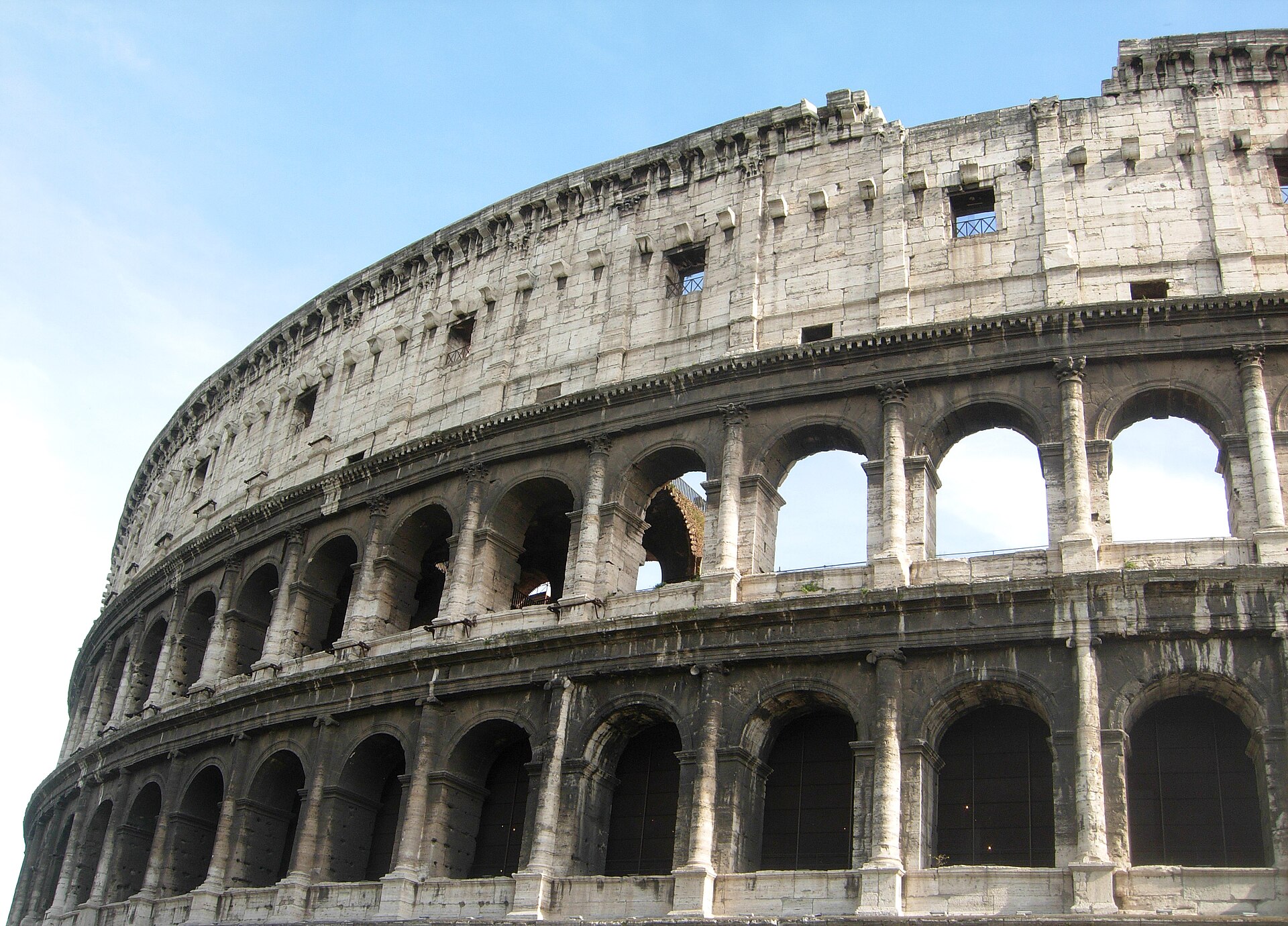
Rome has nearly three thousand years of recorded violence: gladiatorial games, political assassinations (Julius Caesar was stabbed in 44 BC in the Curia of Pompey, near today's Largo di Torre Argentina), persecutions, plagues and papal executions. For centuries, public executions took place in squares such as Campo de' Fiori, where the philosopher Giordano Bruno was burned for heresy in 1600 — his hooded statue stands there today, facing the Vatican.
Because Roman law forbade burials inside the city walls, early Christians and Jews dug catacombs outside the walls along the consular roads, kilometres of tunnels holding hundreds of thousands of burials.
Haunted places
- Capuchin Crypt (Via Veneto) — six small chapels decorated with the bones of thousands of Capuchin friars, arranged into arches, lamps and patterns. A sign reminds visitors: "What you are now, we once were; what we are now, you shall be."
- Catacombs of San Callisto (Via Appia Antica) — one of the largest catacomb complexes, with burial galleries on several levels and the so-called Crypt of the Popes.
- Castel Sant'Angelo — built as Hadrian's mausoleum, later a papal fortress and prison. Its terrace is the setting of the final act of Puccini's opera Tosca.
- Ponte Sant'Angelo — the bridge where executions were carried out and the heads of the condemned were displayed in the 16th century.
The creepiest legend: Beatrice Cenci
The execution of Beatrice Cenci is documented history: in 1599 she was beheaded at Ponte Sant'Angelo with members of her family for the murder of her father, a violent nobleman who had abused her. Romans saw her as a victim and her story inspired writers from Shelley to Stendhal. The legend says that on the night of 10–11 September, the anniversary of her death, her ghost appears on the bridge carrying her severed head. There is no evidence for the sighting, but the story is still told on Roman night walks.
Historical mysteries
The Porta Alchemica (the "Magic Door") in Piazza Vittorio is a real 17th-century doorway carved with alchemical symbols and inscriptions — the last surviving part of a villa owned by Marquis Massimiliano Palombara. Folklore claims an alchemist vanished after turning lead into gold, leaving only the formula behind. It is free to see, in a public garden near Termini.
The Erasmus side
Rome hosts some of Italy's largest universities, including Sapienza, and a huge international student population. Life revolves around aperitivo in Trastevere and San Lorenzo, free first-Sunday museum days and endless walking. It is more expensive than Southern Italian cities, but few places compete with studying among ruins.
Budget
- Free: Campo de' Fiori and Giordano Bruno's statue, Ponte Sant'Angelo, the Porta Alchemica, Largo di Torre Argentina (visible from street level).
- Capuchin Crypt and Museum: paid admission. Consult the official museum for current tickets and concessions; dress appropriately for a religious site and follow its photography rules.
- Catacombs of San Callisto: €10 standard / €7 concession on the official ticket page, reviewed for publication on 1 November 2026. Concessions are limited to listed eligible groups, not all students. Visits are guided; check reservation requirements and accessibility before booking.
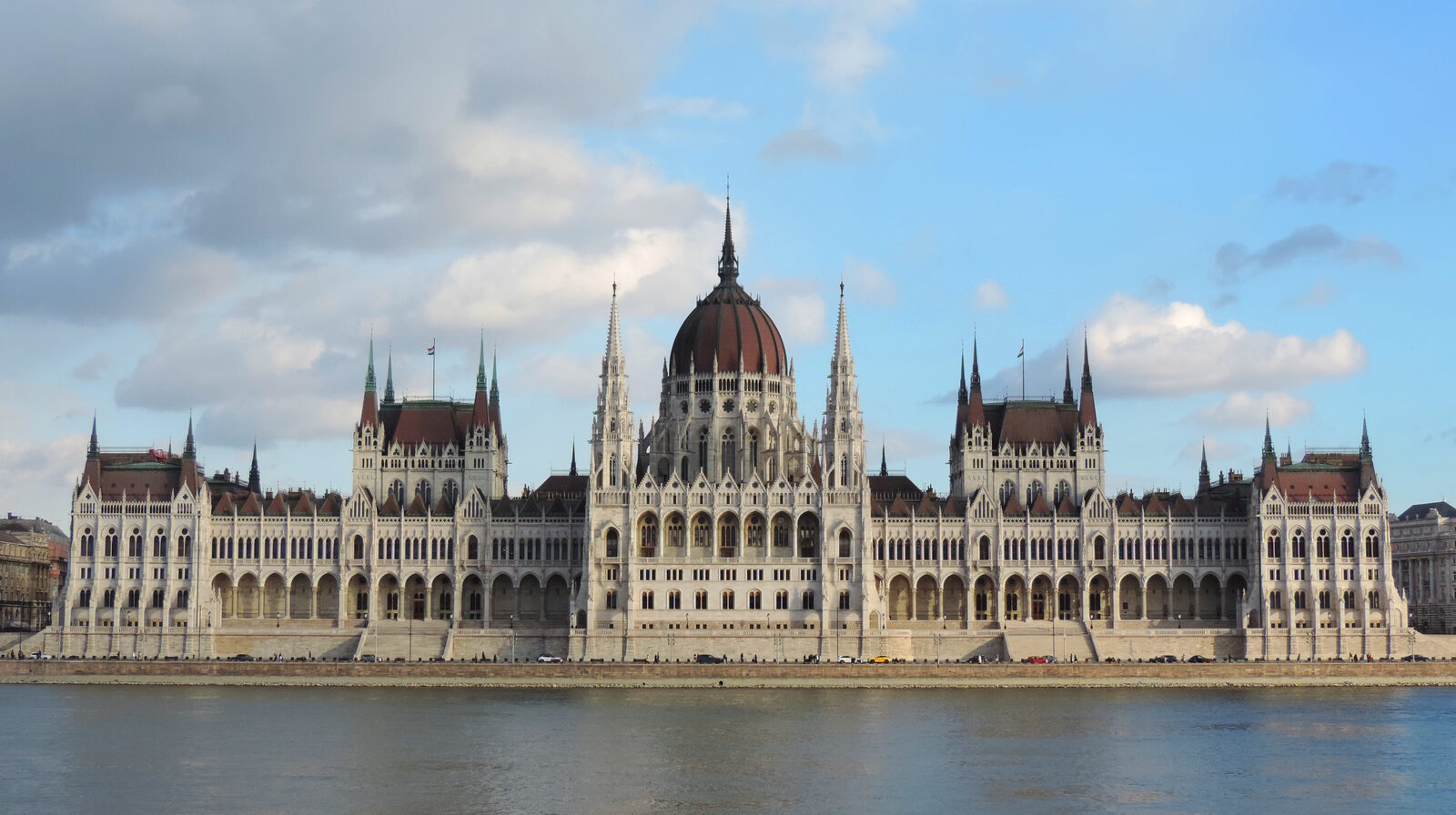
3. Budapest — labyrinths, bunkers and a heavier recent past
The dark history
Budapest's darkest stories are often the most recent. The city endured the Ottoman occupation, the brutal 1944–45 siege at the end of the Second World War, the Arrow Cross terror against the Jewish population, and decades of communist secret-police surveillance. The Shoes on the Danube Bank memorial — 60 pairs of iron shoes — remembers the Jews shot into the river by Arrow Cross militiamen in 1944–45.
Haunted places
- Buda Castle Labyrinth — a natural cave system beneath Castle Hill, used over centuries as cellars and shelters. A walk-through takes around half an hour, partly in near-darkness.
- House of Terror (Andrássy út 60) — the former headquarters of both the Arrow Cross and the communist State Security (ÁVH), now a museum with reconstructed basement cells.
- Hospital in the Rock — a secret hospital built inside the castle caves, used during the 1944–45 siege and the 1956 revolution, later converted into a nuclear bunker.
- Kerepesi Cemetery — a vast, atmospheric 19th-century cemetery with elaborate mausoleums of Hungarian statesmen and artists.
The creepiest legend: Vlad the Impaler in the labyrinth
Popular tradition holds that Vlad III Dracula was imprisoned in the caves under Buda Castle. Historically, Vlad was held by the Hungarian king Matthias Corvinus for a number of years in the 1460s–1470s, but where exactly he was kept is not documented, and historians generally place him at Visegrád or Pest rather than in the caves. Treat the labyrinth's Dracula connection as legend — a fun one, not a fact.
Historical mysteries
Hungary's most infamous historical figure is Countess Elizabeth Báthory (1560–1614), accused of torturing and killing young women. She was confined in Čachtice Castle (in today's Slovakia) until her death. Accounts of hundreds of victims and of bathing in blood are later embellishments; some historians even argue the trial was politically motivated. It is a genuine historical mystery, still debated.
The Erasmus side
Budapest is one of Europe's great student cities: ruin bars in the old Jewish quarter, thermal baths, low prices and big universities such as ELTE, Corvinus and BME. The ESN community is active and the city is perfectly placed for weekend trips to Vienna, Bratislava and the Danube Bend.
Budget
- Free: the Shoes on the Danube Bank memorial, Kerepesi Cemetery, walking Castle Hill.
- Buda Castle Labyrinth: paid admission; we could not verify a current official tariff. Confirm availability and prices before travelling, rather than relying on older visitor listings.
- House of Terror: HUF 4,000 full / HUF 2,000 reduced on the official ticket page, reviewed for publication on 1 November 2026. Reduced-price eligibility includes specified age and EEA citizenship conditions; a student card alone does not guarantee a discount.
- Hospital in the Rock: guided visits with paid admission; consult the official museum for current tours, tickets and age restrictions. This museum and the Danube memorial address real suffering, not supernatural entertainment.
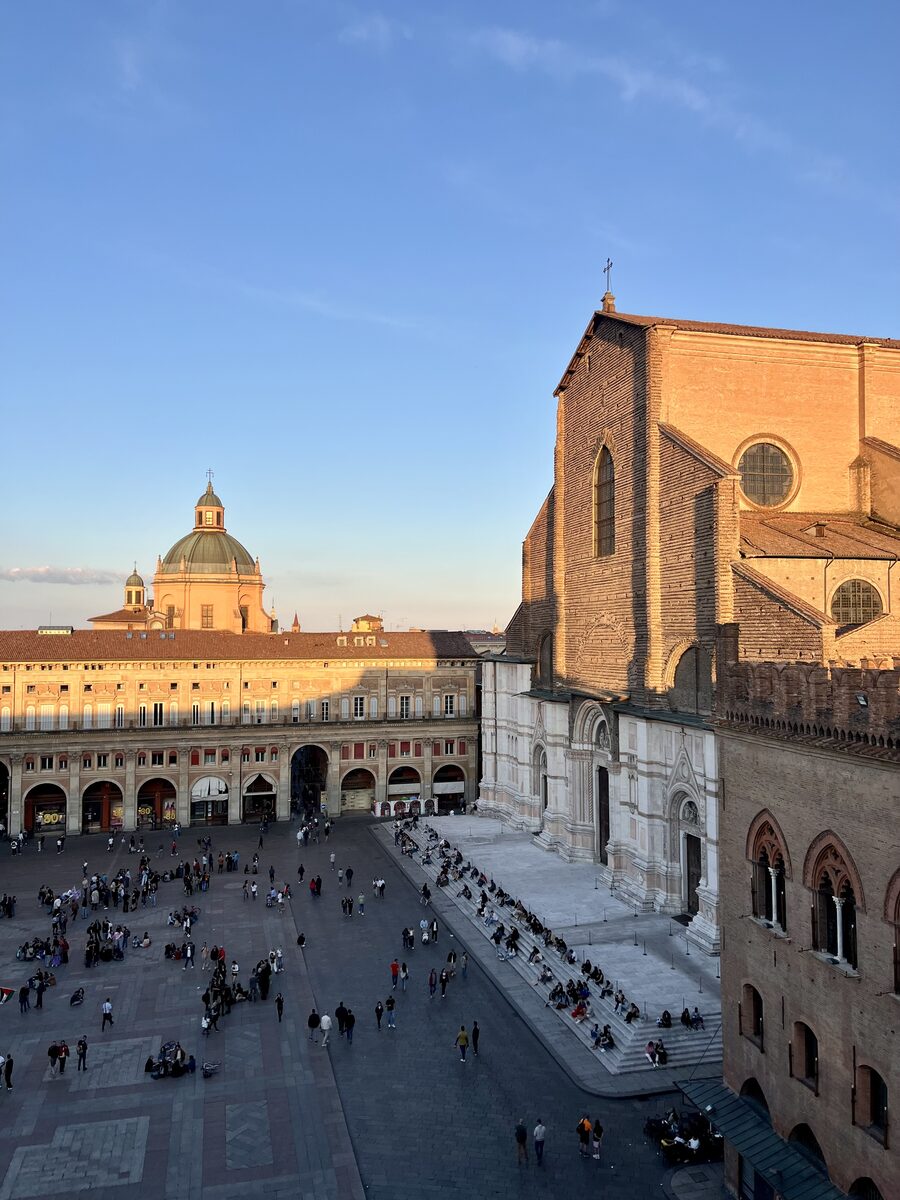
4. Bologna — anatomy theatres, secret canals and whispering arches
The dark history
Bologna is home to the oldest university in continuous operation in the Western world (founded in 1088), and much of its darker heritage comes from that scholarly past — in particular the study of the human body. Dissections were performed publicly for medical students, and the city kept collections of anatomical wax models and preserved specimens.
Haunted places
- Anatomical Theatre of the Archiginnasio — a 17th-century lecture hall carved entirely in spruce, where public dissections were carried out under the eyes of the "Spellati" (the skinned men), two carved figures supporting the lecturer's canopy. Rebuilt after Second World War bombing damage.
- Compianto sul Cristo morto (Santa Maria della Vita) — Niccolò dell'Arca's 15th-century terracotta group of mourners frozen mid-scream; one of the most unsettling sculptures in Italy.
- The Finestrella on Via Piella — a tiny window that reveals a hidden canal; Bologna once had a network of waterways that now runs mostly underground.
The creepiest legend: the whispering corner
Under the Voltone del Podestà, next to Piazza Maggiore, you can whisper into one corner of the vault and be heard clearly by someone standing in the diagonally opposite corner. The acoustic effect is real and documented. The popular story — that it was built so that lepers could confess to priests without contagion — is a local tale without historical evidence. Bologna's other famous "secrets" (the hidden arrow in Strada Maggiore, the painted devil) belong to the city's playful folklore rather than the paranormal.
Historical mysteries
Bologna has less verifiable ghost material than Prague or Rome, so we keep this section short rather than invent stories. The city's real mystery is what lies under it: medieval canals, crypts beneath churches such as Santo Stefano (a complex of interconnected churches with roots in the early Middle Ages), and the 13th-century Garisenda tower, whose famous lean has kept it closed for safety works since 2023.
The Erasmus side
Bologna is a true university town: its large student community shapes the centre, covered porticoes make walking comfortable, and the food — tortellini, mortadella, tagliatelle al ragù — is legendary. It is compact, social and very well connected by train to Florence, Venice and Milan.
Budget
- Free: the whispering arches, the Finestrella, the Archiginnasio's courtyard and staircases, the Santo Stefano complex.
- Anatomical Theatre: paid admission; consult the Archiginnasio and Bologna Welcome for the current visit format, booking requirements and concessions. We omit an unconfirmed tariff rather than mixing guided-tour and admission prices.
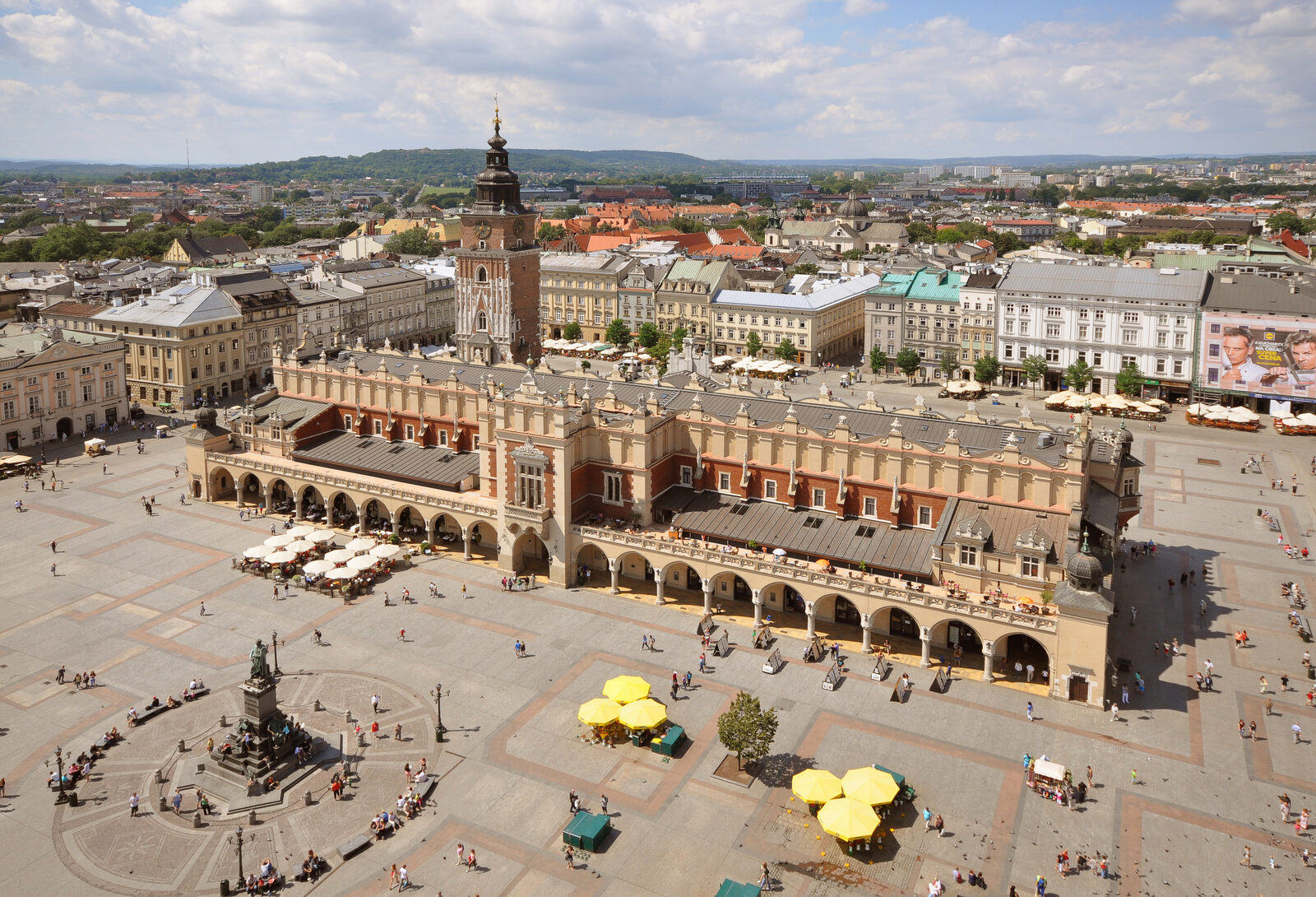
5. Krakow — dragons, salt and a royal crypt
The dark history
Krakow was Poland's royal capital for centuries and survived the Second World War largely intact, although its Jewish community was almost entirely destroyed. The Kazimierz district and the former Podgórze ghetto, where Oskar Schindler's factory now houses a museum, carry this history. Auschwitz-Birkenau, about 70 km away, is a place of remembrance rather than a "dark tourism" attraction — it should be visited with respect.
Haunted places
- Wawel Cathedral crypts — the burial place of Polish kings, national heroes and poets, beneath the cathedral on Wawel Hill.
- The Dragon's Den (Smocza Jama) — a limestone cave under Wawel Hill linked to the city's founding legend; it opens seasonally and exits next to a fire-breathing dragon statue by the Vistula.
- Rakowicki Cemetery — a beautiful, quiet 19th-century cemetery, especially atmospheric on 1 November (All Saints' Day) when thousands of candles are lit.
The creepiest legend: the Wawel Dragon
The legend tells of a dragon living in a cave beneath Wawel Hill that devoured livestock and young women until a cobbler's apprentice fed it a sheep stuffed with sulphur. The dragon drank from the Vistula until it burst. Less known is the story of the trumpeter of St Mary's Basilica: every hour the hejnał melody is played from the tower and stops abruptly mid-note, said to commemorate a trumpeter shot by an arrow while warning of a Tatar attack. The hourly call is a real tradition; the arrow story is folklore.
Historical mysteries
The so-called curse of King Casimir IV Jagiellon grew out of reports of deaths after his tomb in Wawel Cathedral was opened in 1973. Exposure to fungi is a proposed natural explanation, but a reported association is not proof that every death had the same cause. The curse belongs to popular storytelling, not verified evidence of the supernatural.
The Erasmus side
Krakow is one of the most affordable and lively Erasmus cities: Jagiellonian University (1364) and AGH host many international students, cellar bars fill the Old Town and Kazimierz, and the Tatra mountains are a weekend away.
Budget
- Free: St Mary's hourly hejnał, walking Kazimierz and Rakowicki Cemetery, the dragon statue by the river.
- Dragon's Den: ticketed and seasonal; check Wawel Royal Castle before travelling. Cathedral crypt visits have separate tickets and visitor arrangements through Wawel Cathedral; do not assume a castle ticket covers both.
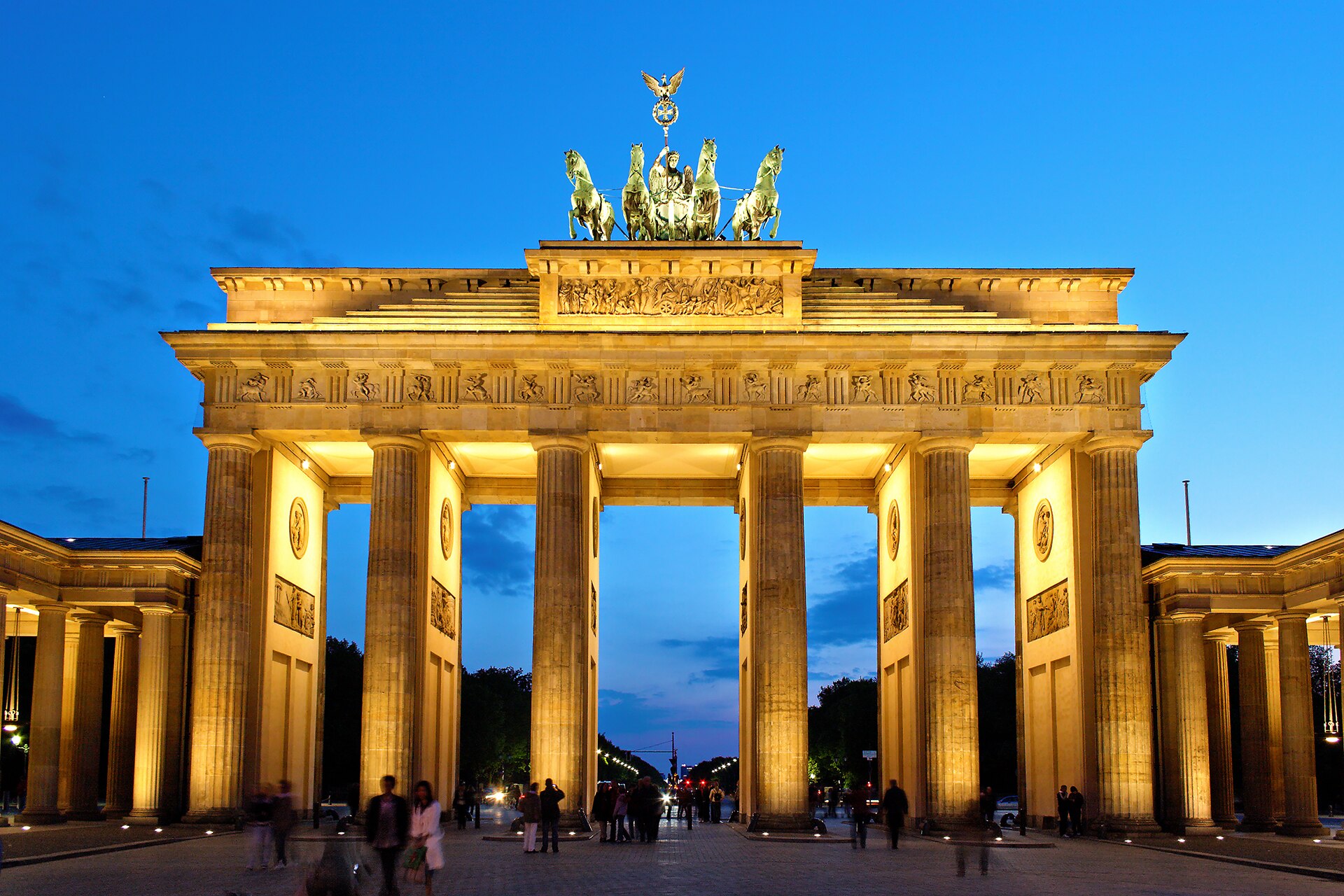
6. Berlin — bunkers, tunnels and the scars of the 20th century
The dark history
Berlin's darkness is almost entirely documented history rather than legend: the Nazi regime, the bombing of the city, the division by the Wall (1961–1989) and the Stasi's surveillance. That is what makes it unique among haunted cities — the most chilling places are real, recent, and well explained.
Haunted places
- Berliner Unterwelten — guided tours through Second World War air-raid shelters, flak towers and Cold War escape tunnels beneath the city.
- Topography of Terror — an open-air and indoor documentation centre on the site of the former Gestapo and SS headquarters.
- Beelitz-Heilstätten — a vast former sanatorium complex outside Berlin, partly abandoned and partly restored, with a treetop walkway over the ruins.
- Berlin Wall Memorial (Bernauer Straße) — a preserved section of the death strip with watchtower.
The creepiest legend: the White Lady
The Hohenzollern family has its own ghost: the White Lady (Weiße Frau), said to appear in Berlin's royal palaces shortly before the death of a family member. Sightings were reported for centuries and became part of Prussian court lore. This is folklore with no verifiable evidence, but it was famous enough to be written about by many contemporaries.
Historical mysteries
Berlin's ghost stations — U-Bahn and S-Bahn stations in East Berlin that West Berlin trains passed through without stopping during the division — are a real piece of Cold War history. Guards watched over dimly lit, empty platforms for nearly three decades. Some, like Nordbahnhof, now host small exhibitions.
The Erasmus side
Berlin is a magnet for international students: Humboldt, Freie Universität and TU Berlin, a legendary club scene, endless galleries and parks. Housing is competitive and rents can be high, so secure accommodation early rather than assuming the city is cheap.
Budget
- Free: Topography of Terror, the Berlin Wall Memorial, the Nordbahnhof ghost station exhibition.
- Berliner Unterwelten: paid guided tours; check the official programme for tour-specific prices, languages, age limits and accessibility. Underground routes may involve stairs, enclosed spaces and cold temperatures.
- Memorials: the Topography of Terror and Berlin Wall Memorial are places for learning and remembrance. Beelitz is outside Berlin: use authorised visits only, never enter restricted ruins.
7. Vienna — catacombs, the fool's tower and a city in love with death
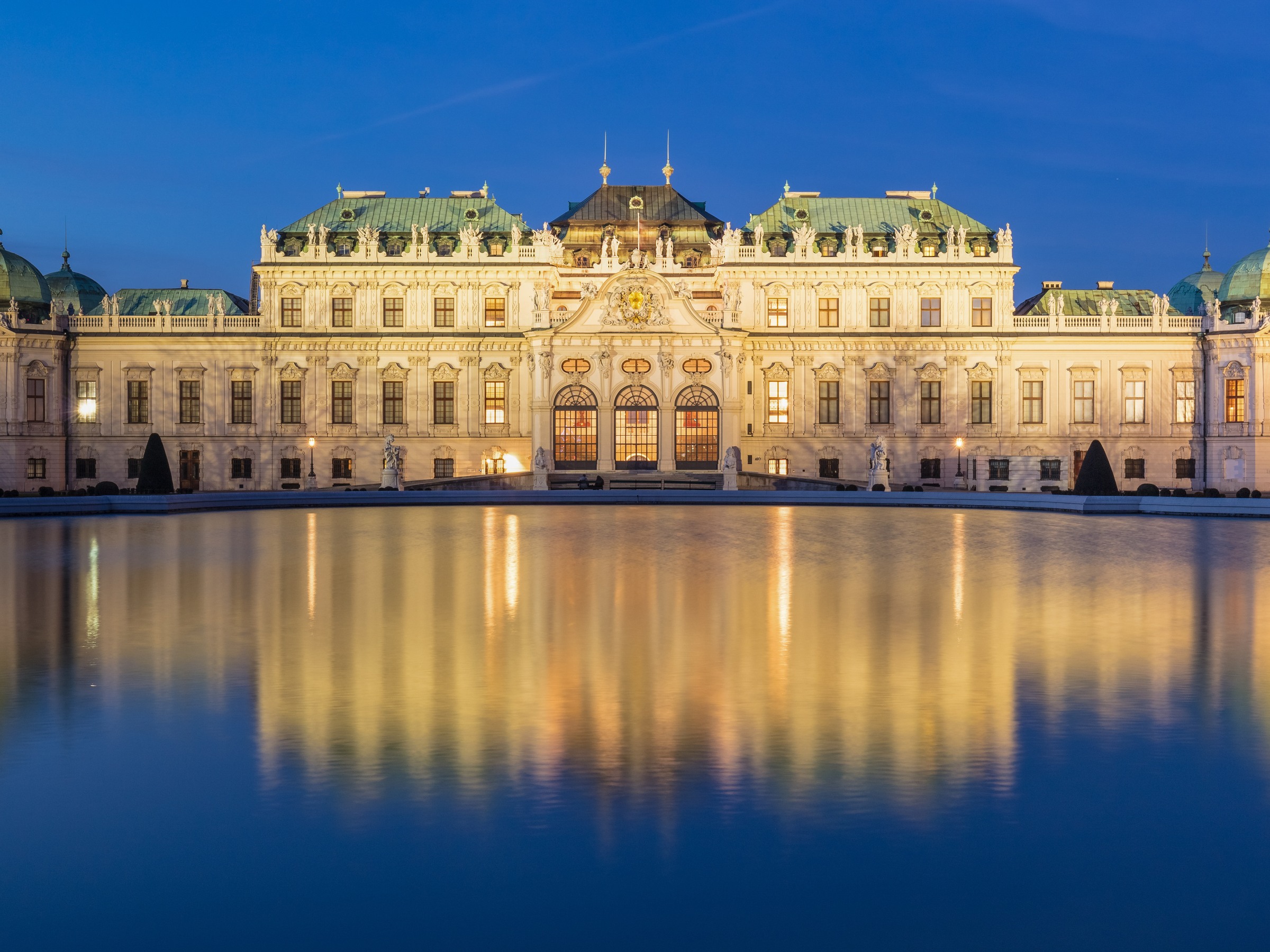
The dark history
Vienna has an unusual relationship with death — Austrians even have a phrase for it, "a schöne Leich" (a beautiful funeral). Plague epidemics struck repeatedly; the Plague Column on the Graben commemorates the end of the 1679 epidemic. The Habsburgs had their hearts, entrails and bodies buried in three separate places across the city.
Haunted places
- St Stephen's Cathedral catacombs — crypts holding the remains of thousands of plague-era Viennese, as well as urns with Habsburg entrails. Visits are by guided tour.
- Imperial Crypt (Kapuzinergruft) — the burial place of 12 emperors and 19 empresses in ornate sarcophagi.
- Narrenturm ("Fool's Tower") — an 18th-century circular tower that was one of the first psychiatric institutions in Europe, now home to the pathological-anatomical collection of the Natural History Museum.
- Zentralfriedhof and the Funeral Museum — one of Europe's largest cemeteries, with Beethoven, Schubert and Brahms, plus a museum dedicated to Viennese burial culture.
The creepiest legend: dear Augustin
During the 1679 plague, the bagpiper Marx Augustin supposedly got drunk, fell asleep in the street and was thrown into a plague pit by gravediggers who thought he was dead. He woke up, played his bagpipe until rescued and — according to the legend — never caught the plague. The song "Oh du lieber Augustin" keeps the story alive. A musician named Augustin probably existed, but the pit episode is folklore.
Historical mysteries
The Mayerling incident of 1889 — when Crown Prince Rudolf and Baroness Mary Vetsera were found dead in a hunting lodge outside Vienna — is one of the most debated events in Habsburg history. It is officially considered a murder-suicide, but the circumstances and the cover-up that followed fuelled rumours for more than a century.
The Erasmus side
Vienna regularly ranks among the most liveable cities in the world. The University of Vienna, WU and TU Wien host thousands of exchange students, public transport is excellent, and cheap standing-room tickets make the opera accessible to students.
Budget
- Free: the Plague Column, the Zentralfriedhof, walking the Graben and the cathedral's nave.
- Narrenturm: paid admission with eligibility-based concessions; check the Natural History Museum's official visitor information. Anatomical displays can be confronting; treat the collection as medical history, not a spectacle of patients' suffering.
- Cathedral catacombs and Imperial Crypt: ticketed with separate arrangements. Check St Stephen's Cathedral and the Imperial Crypt for current tours, tickets and access requirements.
Comparing the seven haunted cities
The ratings below are editorial assessments by Erasmus City Finder, not objective data or statistics. They summarise the research in this guide on a 1–5 scale:
- Scary Factor: how intense the most unsettling sites feel (bone chapels, crypts, sites of real violence).
- Historical Atmosphere: how much of the old city survives and how strongly its history is felt on the street.
- Haunted Experiences: the range of visitable crypts, tunnels, catacombs and well-documented sites.
- Creepiest Places: the strength of the single most memorable site.
- Student Life: the city's overall appeal as an Erasmus destination, based on our city profiles.
| City | Scary Factor | Historical Atmosphere | Haunted Experiences | Creepiest Places | Student Life |
|---|---|---|---|---|---|
| Prague | 5 | 5 | 5 | 5 | 5 |
| Rome | 4 | 5 | 5 | 5 | 4 |
| Budapest | 4 | 4 | 4 | 4 | 5 |
| Vienna | 4 | 4 | 4 | 4 | 4 |
| Berlin | 4 | 3 | 4 | 3 | 5 |
| Krakow | 3 | 5 | 3 | 3 | 5 |
| Bologna | 2 | 4 | 2 | 3 | 5 |
- 1
Prague
25Bone chapel, Golem legend and an intact medieval core — the most complete haunted experience.
- 2
Rome
23Capuchin Crypt and catacombs: an unusually rich collection of bone chapels and underground burial sites.
- 3
Budapest
21Caves, bunkers and a heavy 20th century, with one of Europe's best student scenes.
- 4
Vienna
20Plague catacombs, the Fool's Tower and a city famously at peace with death.
- 5
Berlin
19Real tunnels and bunkers — the darkness here is history, not legend.
- 6
Krakow
19Dragon legends, royal crypts and a magical, candle-lit All Saints' Day.
- 7
Bologna
16Less spooky, more curious: anatomy theatres and whispering arches.
Which Haunted City Should You Explore?
- For the full gothic experience: Prague — alchemy, legends and a bone chapel a short train ride away.
- For bones and catacombs: Rome — the Capuchin Crypt and the catacombs of the Via Appia.
- For caves and secret hospitals: Budapest — underground labyrinths and Cold War bunkers.
- For curious, not creepy: Bologna — anatomy theatres, hidden canals and acoustic tricks.
- For legends and candlelight: Krakow — dragons, royal crypts and All Saints' Day.
- For real history underground: Berlin — bunkers, escape tunnels and ghost stations.
- For an elegant obsession with death: Vienna — catacombs, imperial crypts and the Fool's Tower.
Want to see how these cities compare as places to live? Browse all destinations in Explore Cities, find the city that fits your profile with City Finder, or put two finalists side by side in Compare Cities.
Final thoughts
Haunted or not, these seven cities share something important: their dark stories exist because they are old, layered and full of history — exactly the qualities that make them unforgettable places to spend an Erasmus semester. Visit the crypts, join a night walk, and then go back to what Erasmus is really about: friends, food and a city that slowly becomes yours.
Remember that several places in this guide are sites of real suffering. Approach memorials and cemeteries with the same respect you would expect at home.
Frequently asked questions
What is the most haunted Erasmus city in Europe?
In our editorial assessment, Prague offers the most complete haunted experience, combining the Golem legend, the 27 crosses on Old Town Square and the Sedlec Ossuary near Kutná Hora. Rome is a close second thanks to the Capuchin Crypt and its catacombs.
Are the ghost stories in this guide real?
We separate documented history from legend and paranormal claims. Events such as executions, plagues and wars are documented; ghost sightings like Beatrice Cenci's on Ponte Sant'Angelo are folklore with no verifiable evidence.
Which haunted places can students visit for free?
Many: Old Town Square in Prague, Campo de' Fiori and the Porta Alchemica in Rome, the Shoes on the Danube Bank in Budapest, Bologna's whispering arches, the Topography of Terror in Berlin and Vienna's Zentralfriedhof.
Do haunted sites offer student discounts?
Some museums offer concessions, but eligibility varies by age, citizenship, student status and tour. Check the official ticket conditions before booking; do not assume every Erasmus student receives a discount. Bring your student card and any required age or residency documentation.